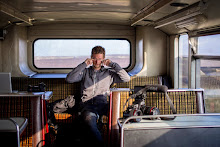
S is from Homs, central Syria now lives in Istanbul, Turkey.
After being arrested and charged with homosexuality in Saudi Arabia, S managed to escape the country.
The man he had sex with, and who set him up for arrest, was according to S, working for the government's security services.
Though this pressure, S managed to blackmail him and secure his pardon, escaping the death penalty (enforced in Saudi Arabia against homosexuals), and being locked up in the home of his lover prior to a prison.
He returned to Syria with psychological issues after believing he was going to be killed. "Haven't you seen what they do?!" S played a video of a public beheading in the streets of Saudi Arabia on his mobile phone.
Now in Istanbul, S works as an escort. He gets money and gifts from "VIP" clients for sleeping with them, and for being there for them when they are in Istanbul. Most of his clients come from the Arabic gulf states; Kuwait, Qatar, UAE, etc. S says he will never take a Saudi after his experiences there.
He survives from the money he makes as an escort and also manages to support several other gay men from Syria, which S says is his duty and responsibility.
S wants to be resettled in another country, and has applied to the UNHCR, although the process is lengthy and resettlement is unlikely.
Alongside governments that outlaw homosexuality in the region, like that of Bashar al-Assad in S's native Syria, ISIS now poses a threat to LGBT people. This image is taken from the top of a building in Istanbul. In areas of Syria under ISIS control S would be thrown to his death from such a place, which ISIS widely publicised in photographs and videos, in recent propoganda material designed to scare and intimidate.
This image is part of a new segment of my ongoing Kütmaan project about LGBT asylum seekers and refugees.
Look out for a feature article on the subject soon, alongside the full image series.
*I have not been able to independently verify the claims S made of his experiences in Saudi Arabia. This account is his personal testimony.
The stories of the people I have photographed. The stories of those that I have met. Tales of journeys and place. My photographs, my travels, 'their' tales.
Showing posts with label photojournalism. Show all posts
Tuesday, 26 May 2015
Istanbul for a gay Syrian
Labels:
2015,
Bashar al-Assad,
bradley secker,
conflict,
gay,
homophobia,
homosexuality,
isis,
istanbul,
killing,
lgbt,
male,
man,
murder,
photojournalism,
refugee,
syria,
Syrian,
Turkey,
war
Tuesday, 4 March 2014
I need your help - support and become involved in photojournalism
I'm crowd-funding a series I've been shooting for a while - Syrian Nakba Keys, and need your help to continue with. By spreading word, links, social media links or donating you can become involved in the story and the project. Learn more about the campaign here: Syrian Nakba Keys
There are plenty of rewards on offer for your financial help.
Many thanks,
Bradley
There are plenty of rewards on offer for your financial help.
Many thanks,
Bradley
Labels:
crowd funding,
crowdfunding,
hands,
independent,
keys,
Nakba,
photography,
photojournalism,
refugees,
support,
syria,
Syrian
Thursday, 9 January 2014
Abdul receives asylum in the Netherlands
Abdul, an Iraqi asylum seeker I photographed in 2010, finally received refugee status in the Netherlands this week after years of waiting in Damascus, Syria. Without the finances to leave Syria as war enveloped the country, he continued to wait in Damascus.
Not knowing what the future held whilst waiting patiently in a city gently disintegrating into chaos, it must have felt reminiscent of the Baghdad he left years before.
His What'sapp message was definitely the best of 2014 so far. Happy New Year Abdul!
Not knowing what the future held whilst waiting patiently in a city gently disintegrating into chaos, it must have felt reminiscent of the Baghdad he left years before.
Smuggling himself to a neighbouring country he was then able to take his flight to Amsterdam, where he says he's happy.
Despite this being only a small piece of positive news coming from Syria, it reminds me that there is some good news to receive from this catastrophe.
As news filters through from Syria of further homophobic executions committed by extremist groups, I'm happy to see a friend far away, safe, and in a country that has led the world in LGBT rights for decades.
His What'sapp message was definitely the best of 2014 so far. Happy New Year Abdul!
Labels:
2013,
asylum seeker,
Damascus,
EU,
European Union,
gay,
homophobia,
homosexuality,
hope,
human rights,
immigration,
iraq,
Middle East,
migration,
personal,
photojournalism,
syria,
Syrie,
UNHCR
Monday, 23 December 2013
Memories in suitcases
Ali's bags were packed for his imminent departure to Canada, after more than two years of waiting in a small city in western Turkey. One of the tens of young Iranian men identifying as homosexual, that chose, or were forced to leave their country and claim for asylum and resettlement from Turkey.
After briefly explaining the gay life in Shiraz, Ali's hometown in southern Iran, he took out a carefully wrapped and labelled package from one of his suitcases containing home made films of private gay parties hosted at friend's homes, as part of what formed the underground 'scene'.
As the first seconds on the film flashed on the laptop screen, he said something that for me encapsulated the situation for LGBT Iranians, and those displaced due to their sexuality and gender identity around the world.
"Honestly, I don't know what happened to all these people. Some are refugees, some are living in Canada, some still in Iran, some imprisoned, and others are dead."
The films showed groups of men in their 20's and 30's dancing, eating, laughing, smoking and enjoying this safe space together. In at least three of the videos, the parents of the host were not only present, but fully embracing the situation, joining the dancing, clapping, and joking whilst bringing dishes of food to their guests.
Turkey, December 20th 2013.
Image caption: Sourena, left and Ali, right looking at photos and videos in Sourena's kitchen, Turkey. (C) Bradley Secker
After briefly explaining the gay life in Shiraz, Ali's hometown in southern Iran, he took out a carefully wrapped and labelled package from one of his suitcases containing home made films of private gay parties hosted at friend's homes, as part of what formed the underground 'scene'.
As the first seconds on the film flashed on the laptop screen, he said something that for me encapsulated the situation for LGBT Iranians, and those displaced due to their sexuality and gender identity around the world.
"Honestly, I don't know what happened to all these people. Some are refugees, some are living in Canada, some still in Iran, some imprisoned, and others are dead."
The films showed groups of men in their 20's and 30's dancing, eating, laughing, smoking and enjoying this safe space together. In at least three of the videos, the parents of the host were not only present, but fully embracing the situation, joining the dancing, clapping, and joking whilst bringing dishes of food to their guests.
Turkey, December 20th 2013.
Image caption: Sourena, left and Ali, right looking at photos and videos in Sourena's kitchen, Turkey. (C) Bradley Secker
Labels:
2013,
asylum seeker,
displaced,
gay,
homosexuality,
hope,
human rights,
iran,
Middle East,
personal,
photo,
photojournalism,
politics,
refugee,
Turkey,
UNHCR
Monday, 7 January 2013
Born under canvas
A thought for those born and spending their early years growing up in tents.
Thousands of Syrian children are spending the cold nights and rainy days in refugee camps in Turkey. Some even born into displacement camps, such as the one in Atmeh, western Syria, see photo.
The longer the war and instability continues in Syria, the more children will be without education, warmth, proper healthcare, routine, stability, family, freedom and a home.
Labels:
2013,
conflict,
freedom,
hatay,
human rights,
Middle East,
photography,
photojournalism,
refugee,
refugees,
revolution,
rights,
syria,
Syrian,
Syrie,
war
Thursday, 26 April 2012
Repatriated
After living and working in Cyprus as an exile for the past ten years, Zakariah decided to return to his native Syria four months ago to join the Free Syrian Army (FSA), something he says is "my duty as a Syrian".
Far from unusual, many Syrian ex-pats are now returning to the country to take up arms, fighting against the regime they fled many years before. With little or no military training, sometimes only from the military service in their late teens or early twenties as in Zakariah's case, individuals smuggle themselves into their own country to do what they think will bring freedom, change, and an end to Bashar Al-Assad's very bloody crackdown.
Offering to help in any way possible, the repatriated are viewed most useful when armed, provided they are trusted by the others. Basic training is given and the 'soldiers' join the ranks of military defectors, ex-Mukharrabat, and armed locals. Zakariah thought about his decision to return carefully, considered his options, and then went about getting in touch with what was then a recently formed FSA, via Facebook.
Months passed, and he continued to work in the construction industry in Cyprus, exchanging messages regularly, until he was finally trusted and told to come to Antakya, from where he would be equipped, smuggled into Syria, and provided with basic military training. It was January 2012.
Only 12 months ago Zakariah's life was filled with work, sunshine, a network of international friends, a girlfriend, enjoyment, his life was care-free and moving forward.
Since March 2011 the killing of thousands by their own government, has caused many like Zakariah to return and fight, giving up the life abroad that they left family and friends to make, and spent so much time establishing, to gain freedom for those they left behind.
Far from unusual, many Syrian ex-pats are now returning to the country to take up arms, fighting against the regime they fled many years before. With little or no military training, sometimes only from the military service in their late teens or early twenties as in Zakariah's case, individuals smuggle themselves into their own country to do what they think will bring freedom, change, and an end to Bashar Al-Assad's very bloody crackdown.
Offering to help in any way possible, the repatriated are viewed most useful when armed, provided they are trusted by the others. Basic training is given and the 'soldiers' join the ranks of military defectors, ex-Mukharrabat, and armed locals. Zakariah thought about his decision to return carefully, considered his options, and then went about getting in touch with what was then a recently formed FSA, via Facebook.
Months passed, and he continued to work in the construction industry in Cyprus, exchanging messages regularly, until he was finally trusted and told to come to Antakya, from where he would be equipped, smuggled into Syria, and provided with basic military training. It was January 2012.
Only 12 months ago Zakariah's life was filled with work, sunshine, a network of international friends, a girlfriend, enjoyment, his life was care-free and moving forward.
Since March 2011 the killing of thousands by their own government, has caused many like Zakariah to return and fight, giving up the life abroad that they left family and friends to make, and spent so much time establishing, to gain freedom for those they left behind.
Wednesday, 21 March 2012
No news, no answers...
Reyhanli, Hatay, Turkey: Syrian refugee camp
18th March 2012
Months of waiting. No news.
Loved ones dying, missing. No contact.
Questions about the future. No answers.
With the lack of information, your mind fabricates ideas of the worst kind, round and round again and again. Trapped only 20 km away on the other side of the razor wire that separates Turkey from Syria, a daughter is trapped in her village after going back for more children, or at least that was the latest news received three months ago.
Since then anything could have happened, especially since the town was hit by further shelling several days ago, still no news. Sitting with a grandchild she can only hope for the best, put on a positive smile.
An elderly brother lost his wife shortly after hauling her paralysed body to Turkey a few months ago.
Even in exile the loss of life continues, the mind keeps the fear alive; children wet their beds, nobody answers the calls for help and no one has any answers.
18th March 2012
Months of waiting. No news.
Loved ones dying, missing. No contact.
Questions about the future. No answers.
With the lack of information, your mind fabricates ideas of the worst kind, round and round again and again. Trapped only 20 km away on the other side of the razor wire that separates Turkey from Syria, a daughter is trapped in her village after going back for more children, or at least that was the latest news received three months ago.
Since then anything could have happened, especially since the town was hit by further shelling several days ago, still no news. Sitting with a grandchild she can only hope for the best, put on a positive smile.
An elderly brother lost his wife shortly after hauling her paralysed body to Turkey a few months ago.
Even in exile the loss of life continues, the mind keeps the fear alive; children wet their beds, nobody answers the calls for help and no one has any answers.
Labels:
al-Assad,
Bashar,
bradley secker,
conflict,
hatay,
idlib,
Middle East,
personal,
photo,
photojournalism,
refugee,
refugees,
revolution,
syria,
war
Monday, 27 February 2012
Wounded soldier
Al Janoudiyah, northern Syria, 23rd February 2012
A wounded Free Syrian Army (FSA) soldier lays under a pine tree waiting for a tractor to collect him, to take him to a safe hiding place after the Syrian security services raided a village where he was being treated and hidden.
Luckily escaping capture by the notoriously brutal Syrian security services the first time, Ibrahim managed to escape again from a village where he was being treated, just as the government personnel arrived.
En route to the next hiding place, Ibrahim came under sniper fire sitting on the wheel of a tractor; he luckily managed to avoid further injury.
The following day he was smuggled across the Turkish border for medical treatment in the near by Hatay province of Turkey, where there are large refugee camps provided by the Turkish Red Crescent.
A wounded Free Syrian Army (FSA) soldier lays under a pine tree waiting for a tractor to collect him, to take him to a safe hiding place after the Syrian security services raided a village where he was being treated and hidden.
Luckily escaping capture by the notoriously brutal Syrian security services the first time, Ibrahim managed to escape again from a village where he was being treated, just as the government personnel arrived.
En route to the next hiding place, Ibrahim came under sniper fire sitting on the wheel of a tractor; he luckily managed to avoid further injury.
The following day he was smuggled across the Turkish border for medical treatment in the near by Hatay province of Turkey, where there are large refugee camps provided by the Turkish Red Crescent.
Labels:
2012,
al-Assad,
Bashar,
bradley secker,
conflict,
february,
free syrian army,
FSA,
idlib,
injured,
injury,
janoudiyah,
Middle East,
personal,
photography,
photojournalism,
syria,
war
Tuesday, 31 May 2011
Lost in Europe
Thousands want to get here, hundreds die getting here.
This is seen as the bright side, streets paved with gold, stable government, open living, free loving, money to be made, multiculturalism, individuality, independence, freedom.
Europe.
For those that make the lengthy, often deadly journey into Europe by land, illegally, smuggling themselves, escaping something worse, yearning for freedom, refugees, economic migrants, the final destination is often not what was dreamt about.
Greece - one of the EU's front-lines, the Balkans, islands, water, a short distance from Turkey. Greece is now home to thousands of people who have made long journeys, worked tirelessly, suffered, sacrificed a great deal, people from far away lands; Arabs, Kurds, Palestinians, Sudanese, Algerians, Libyans, Syrians, Pathan, Hazara, Persian and many more.
Greece doesn't want them to stay, but Greece won't let them go also. Trapped. Limbo.
Those looking for more out of life deserve a chance, the opportunity to have their case heard, asylum claims read, and human rights respected, after all; is this not the land of milk and honey?!
Many look for illegal work on farms paying €20 for an 8-10 hour day, hard labour, without rights. Money that will pay smugglers for the rest of their journey, further into Europe.
Maybe their cases will be read in Italy, Switzerland, the Netherlands, Denmark? Maybe not.
Rising right-wing government policies in France and Italy are threatening the greatest achievement of EU partnership - the Schengen agreement. Let's not take steps backwards and undo this.
Migration is an EU issue, not an issue solely for Greece and other southern European countries.
Think of those camping out tonight and every night, those travelling in overladen and unprepared boats, rough seas, leaving your family, searching, fleeing from war and repressive governments.
Welcome to Europe.
Labels:
Afghanistan,
clandestine,
EU,
Europe,
European Union,
freedom,
greece,
hope,
illegal,
immigration,
migration,
movement,
Patra,
Patras,
photojournalism,
refugee,
Turkey
Subscribe to:
Posts (Atom)
About Me
- Bradley Secker
- I am using this blog as a space to tell the stories of the people I have met; some photographed, some not. I'm a photojournalist covering a range of topics through my work.
Blog Archive
-
▼
2016
(2)
- ► 04/03 - 04/10 (1)
-
►
2015
(1)
- ► 05/24 - 05/31 (1)
-
►
2014
(4)
- ► 06/29 - 07/06 (1)
- ► 06/15 - 06/22 (1)
- ► 03/02 - 03/09 (1)
- ► 01/05 - 01/12 (1)
-
►
2013
(3)
- ► 12/22 - 12/29 (1)
- ► 07/28 - 08/04 (1)
- ► 01/06 - 01/13 (1)
-
►
2012
(5)
- ► 04/22 - 04/29 (1)
- ► 03/18 - 03/25 (1)
- ► 03/04 - 03/11 (1)
- ► 02/26 - 03/04 (1)
- ► 01/29 - 02/05 (1)
-
►
2011
(4)
- ► 08/21 - 08/28 (1)
- ► 07/31 - 08/07 (1)
- ► 05/29 - 06/05 (1)
- ► 01/09 - 01/16 (1)
-
►
2010
(7)
- ► 11/28 - 12/05 (1)
- ► 02/28 - 03/07 (1)
- ► 01/24 - 01/31 (3)
- ► 01/10 - 01/17 (2)
-
►
2009
(2)
- ► 11/29 - 12/06 (2)