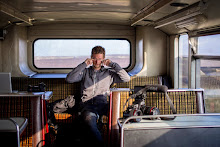
S is from Homs, central Syria now lives in Istanbul, Turkey.
After being arrested and charged with homosexuality in Saudi Arabia, S managed to escape the country.
The man he had sex with, and who set him up for arrest, was according to S, working for the government's security services.
Though this pressure, S managed to blackmail him and secure his pardon, escaping the death penalty (enforced in Saudi Arabia against homosexuals), and being locked up in the home of his lover prior to a prison.
He returned to Syria with psychological issues after believing he was going to be killed. "Haven't you seen what they do?!" S played a video of a public beheading in the streets of Saudi Arabia on his mobile phone.
Now in Istanbul, S works as an escort. He gets money and gifts from "VIP" clients for sleeping with them, and for being there for them when they are in Istanbul. Most of his clients come from the Arabic gulf states; Kuwait, Qatar, UAE, etc. S says he will never take a Saudi after his experiences there.
He survives from the money he makes as an escort and also manages to support several other gay men from Syria, which S says is his duty and responsibility.
S wants to be resettled in another country, and has applied to the UNHCR, although the process is lengthy and resettlement is unlikely.
Alongside governments that outlaw homosexuality in the region, like that of Bashar al-Assad in S's native Syria, ISIS now poses a threat to LGBT people. This image is taken from the top of a building in Istanbul. In areas of Syria under ISIS control S would be thrown to his death from such a place, which ISIS widely publicised in photographs and videos, in recent propoganda material designed to scare and intimidate.
This image is part of a new segment of my ongoing Kütmaan project about LGBT asylum seekers and refugees.
Look out for a feature article on the subject soon, alongside the full image series.
*I have not been able to independently verify the claims S made of his experiences in Saudi Arabia. This account is his personal testimony.
The stories of the people I have photographed. The stories of those that I have met. Tales of journeys and place. My photographs, my travels, 'their' tales.
Showing posts with label bradley secker. Show all posts
Tuesday, 26 May 2015
Istanbul for a gay Syrian
Labels:
2015,
Bashar al-Assad,
bradley secker,
conflict,
gay,
homophobia,
homosexuality,
isis,
istanbul,
killing,
lgbt,
male,
man,
murder,
photojournalism,
refugee,
syria,
Syrian,
Turkey,
war
Saturday, 5 July 2014
Istanbul and around...
Labels:
2014,
boat,
bradley secker,
Europe,
istanbul,
job,
July,
Middle East,
Turkey
Saturday, 21 June 2014
World refugee day 2014
Refugees and displaced people now number more than 50 million worldwide according to the UNHCR's latest figures.
Whatever the reason, being forcibly moved from all you know is never easy, and making the most out of things once you're on the other end is often more troublesome.
Language difficulties, cultural misunderstanding, security concerns, legal issues and loneliness.
Share a thought for those like Bissam (pictured) who spent six years being displaced from his family, his home and all he knew. First to Syria then to Turkey, and finally to San Francisco after long years in rural Turkey.
Whatever the reason, being forcibly moved from all you know is never easy, and making the most out of things once you're on the other end is often more troublesome.
Language difficulties, cultural misunderstanding, security concerns, legal issues and loneliness.
Share a thought for those like Bissam (pictured) who spent six years being displaced from his family, his home and all he knew. First to Syria then to Turkey, and finally to San Francisco after long years in rural Turkey.
Labels:
asylum seeker,
Bissam,
bradley secker,
conflict,
Damascus,
iraq,
lgbt,
refugee,
syria,
Turkey,
UNHCR,
world refugee day
Monday, 29 July 2013
"My memories" Hael, Deir Ezzor, Syria
Millions of Syrians have been displaced, and continue to be, with thousands fleeing across the country's borders on a daily basis. The figures are shocking, and appear to continue as the conflict continues without an end in sight.
The United Nations says that up to 1 in 5 Syrians have been internally displaced, and millions are living in camps in neighbouring countries.
These are the keys of just one man who had to leave his home, where he might not return, or which might not even exist any longer. Hael describes his home as the place of "my memories."
Part of an ongoing series on the keys of Syrian refugees...trying to tell the story visually on a basic level.
The United Nations says that up to 1 in 5 Syrians have been internally displaced, and millions are living in camps in neighbouring countries.
These are the keys of just one man who had to leave his home, where he might not return, or which might not even exist any longer. Hael describes his home as the place of "my memories."
Part of an ongoing series on the keys of Syrian refugees...trying to tell the story visually on a basic level.
Wednesday, 21 March 2012
No news, no answers...
Reyhanli, Hatay, Turkey: Syrian refugee camp
18th March 2012
Months of waiting. No news.
Loved ones dying, missing. No contact.
Questions about the future. No answers.
With the lack of information, your mind fabricates ideas of the worst kind, round and round again and again. Trapped only 20 km away on the other side of the razor wire that separates Turkey from Syria, a daughter is trapped in her village after going back for more children, or at least that was the latest news received three months ago.
Since then anything could have happened, especially since the town was hit by further shelling several days ago, still no news. Sitting with a grandchild she can only hope for the best, put on a positive smile.
An elderly brother lost his wife shortly after hauling her paralysed body to Turkey a few months ago.
Even in exile the loss of life continues, the mind keeps the fear alive; children wet their beds, nobody answers the calls for help and no one has any answers.
18th March 2012
Months of waiting. No news.
Loved ones dying, missing. No contact.
Questions about the future. No answers.
With the lack of information, your mind fabricates ideas of the worst kind, round and round again and again. Trapped only 20 km away on the other side of the razor wire that separates Turkey from Syria, a daughter is trapped in her village after going back for more children, or at least that was the latest news received three months ago.
Since then anything could have happened, especially since the town was hit by further shelling several days ago, still no news. Sitting with a grandchild she can only hope for the best, put on a positive smile.
An elderly brother lost his wife shortly after hauling her paralysed body to Turkey a few months ago.
Even in exile the loss of life continues, the mind keeps the fear alive; children wet their beds, nobody answers the calls for help and no one has any answers.
Labels:
al-Assad,
Bashar,
bradley secker,
conflict,
hatay,
idlib,
Middle East,
personal,
photo,
photojournalism,
refugee,
refugees,
revolution,
syria,
war
Monday, 27 February 2012
Wounded soldier
Al Janoudiyah, northern Syria, 23rd February 2012
A wounded Free Syrian Army (FSA) soldier lays under a pine tree waiting for a tractor to collect him, to take him to a safe hiding place after the Syrian security services raided a village where he was being treated and hidden.
Luckily escaping capture by the notoriously brutal Syrian security services the first time, Ibrahim managed to escape again from a village where he was being treated, just as the government personnel arrived.
En route to the next hiding place, Ibrahim came under sniper fire sitting on the wheel of a tractor; he luckily managed to avoid further injury.
The following day he was smuggled across the Turkish border for medical treatment in the near by Hatay province of Turkey, where there are large refugee camps provided by the Turkish Red Crescent.
A wounded Free Syrian Army (FSA) soldier lays under a pine tree waiting for a tractor to collect him, to take him to a safe hiding place after the Syrian security services raided a village where he was being treated and hidden.
Luckily escaping capture by the notoriously brutal Syrian security services the first time, Ibrahim managed to escape again from a village where he was being treated, just as the government personnel arrived.
En route to the next hiding place, Ibrahim came under sniper fire sitting on the wheel of a tractor; he luckily managed to avoid further injury.
The following day he was smuggled across the Turkish border for medical treatment in the near by Hatay province of Turkey, where there are large refugee camps provided by the Turkish Red Crescent.
Labels:
2012,
al-Assad,
Bashar,
bradley secker,
conflict,
february,
free syrian army,
FSA,
idlib,
injured,
injury,
janoudiyah,
Middle East,
personal,
photography,
photojournalism,
syria,
war
Sunday, 31 July 2011
Clandestino
Evros, Greece
The Evros river region of north eastern Greece has seen a steep increase in the number of undocumented refugees and migrants entering the country illegally over the past five years.
The early hours of the morning bring fresh arrivals from Bangladesh, Pakistan, Nigeria, Iraq, Iran, Somalia, Algeria and many more. Mothers with young children walking for days on end with little food and water.
The area is officially a sensitive military area for both Turkey and Greece, despite upwards of an estimated 100 people crossing per day. Greece has recently received help from Frontex, the European Union's external border agency, to stem the flow of people crossing in the north but this has only pushed the flow people further south.
Crossing the Evros river at night is a dangerous feat for those who cannot swim.
Many die trying to make a better life in Europe, the place they believe will be safer and filled with more opportunities than their country. The journey for many ends here.
Bodies are often recovered months after death, and the identities of those discovered is usually unknown. They are name-less, nation-less. Relatives may never know the fate of their loved ones.
To be continued...
The Evros river region of north eastern Greece has seen a steep increase in the number of undocumented refugees and migrants entering the country illegally over the past five years.
The early hours of the morning bring fresh arrivals from Bangladesh, Pakistan, Nigeria, Iraq, Iran, Somalia, Algeria and many more. Mothers with young children walking for days on end with little food and water.
The area is officially a sensitive military area for both Turkey and Greece, despite upwards of an estimated 100 people crossing per day. Greece has recently received help from Frontex, the European Union's external border agency, to stem the flow of people crossing in the north but this has only pushed the flow people further south.
Crossing the Evros river at night is a dangerous feat for those who cannot swim.
Many die trying to make a better life in Europe, the place they believe will be safer and filled with more opportunities than their country. The journey for many ends here.
Bodies are often recovered months after death, and the identities of those discovered is usually unknown. They are name-less, nation-less. Relatives may never know the fate of their loved ones.
To be continued...
Labels:
border,
bradley secker,
death,
European Union,
evros,
frontex,
greece,
immigration,
migration,
problem,
refugee,
undocumented,
unknown
Location:
Evros, Greece
Thursday, 2 December 2010
A Palestinian Rapper in Beirut

A fresh minded 22 year old Palestinian, first generation to be born in the Burg el-Barajneh refugee camp in the suburbs of Beirut to a member of Hamas and his wife. Instead of encouraging violence, Mohammed al-Turk, aka TNT spreads words of resistance through his music.
He's young and fed up with the cramped living conditions, lack of job opportunities, social stigma and dual identity that being raised in one of Lebanon's 12 official refugee camps for displaced Palestinians offer.
Rap is his weapon against his situation, described as 'war music' by the man himself. His inspiration came not from the streets of New York like the origins of rap, but the streets of his neighbourhood, and he and is partner Yaseen, known as i'Voice (invincible voice) have sculpted the lyrics and beats to suit their message and their audience.
Having performed across Europe and the USA at various world music festivals, TNT disappeared in Oslo before performing at the Oslo world music festival in Norway in November this year (2010). The reason for his disappearance is still not clear, although media sources say that his discovery is not far away. I hope that he is safe, well and not in trouble.
Labels:
beirut,
bradley secker,
lebanon,
missing,
oslo,
palestinian,
palestinian refugee,
rap,
refugee of palestine,
TNT,
world music,
young
Subscribe to:
Posts (Atom)
About Me
- Bradley Secker
- I am using this blog as a space to tell the stories of the people I have met; some photographed, some not. I'm a photojournalist covering a range of topics through my work.
Blog Archive
-
▼
2016
(2)
- ► 04/03 - 04/10 (1)
-
►
2015
(1)
- ► 05/24 - 05/31 (1)
-
►
2014
(4)
- ► 06/29 - 07/06 (1)
- ► 06/15 - 06/22 (1)
- ► 03/02 - 03/09 (1)
- ► 01/05 - 01/12 (1)
-
►
2013
(3)
- ► 12/22 - 12/29 (1)
- ► 07/28 - 08/04 (1)
- ► 01/06 - 01/13 (1)
-
►
2012
(5)
- ► 04/22 - 04/29 (1)
- ► 03/18 - 03/25 (1)
- ► 03/04 - 03/11 (1)
- ► 02/26 - 03/04 (1)
- ► 01/29 - 02/05 (1)
-
►
2011
(4)
- ► 08/21 - 08/28 (1)
- ► 07/31 - 08/07 (1)
- ► 05/29 - 06/05 (1)
- ► 01/09 - 01/16 (1)
-
►
2010
(7)
- ► 11/28 - 12/05 (1)
- ► 02/28 - 03/07 (1)
- ► 01/24 - 01/31 (3)
- ► 01/10 - 01/17 (2)
-
►
2009
(2)
- ► 11/29 - 12/06 (2)