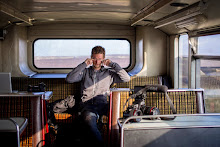
S is from Homs, central Syria now lives in Istanbul, Turkey.
After being arrested and charged with homosexuality in Saudi Arabia, S managed to escape the country.
The man he had sex with, and who set him up for arrest, was according to S, working for the government's security services.
Though this pressure, S managed to blackmail him and secure his pardon, escaping the death penalty (enforced in Saudi Arabia against homosexuals), and being locked up in the home of his lover prior to a prison.
He returned to Syria with psychological issues after believing he was going to be killed. "Haven't you seen what they do?!" S played a video of a public beheading in the streets of Saudi Arabia on his mobile phone.
Now in Istanbul, S works as an escort. He gets money and gifts from "VIP" clients for sleeping with them, and for being there for them when they are in Istanbul. Most of his clients come from the Arabic gulf states; Kuwait, Qatar, UAE, etc. S says he will never take a Saudi after his experiences there.
He survives from the money he makes as an escort and also manages to support several other gay men from Syria, which S says is his duty and responsibility.
S wants to be resettled in another country, and has applied to the UNHCR, although the process is lengthy and resettlement is unlikely.
Alongside governments that outlaw homosexuality in the region, like that of Bashar al-Assad in S's native Syria, ISIS now poses a threat to LGBT people. This image is taken from the top of a building in Istanbul. In areas of Syria under ISIS control S would be thrown to his death from such a place, which ISIS widely publicised in photographs and videos, in recent propoganda material designed to scare and intimidate.
This image is part of a new segment of my ongoing Kütmaan project about LGBT asylum seekers and refugees.
Look out for a feature article on the subject soon, alongside the full image series.
*I have not been able to independently verify the claims S made of his experiences in Saudi Arabia. This account is his personal testimony.
The stories of the people I have photographed. The stories of those that I have met. Tales of journeys and place. My photographs, my travels, 'their' tales.
Showing posts with label conflict. Show all posts
Tuesday, 26 May 2015
Istanbul for a gay Syrian
Labels:
2015,
Bashar al-Assad,
bradley secker,
conflict,
gay,
homophobia,
homosexuality,
isis,
istanbul,
killing,
lgbt,
male,
man,
murder,
photojournalism,
refugee,
syria,
Syrian,
Turkey,
war
Saturday, 21 June 2014
World refugee day 2014
Refugees and displaced people now number more than 50 million worldwide according to the UNHCR's latest figures.
Whatever the reason, being forcibly moved from all you know is never easy, and making the most out of things once you're on the other end is often more troublesome.
Language difficulties, cultural misunderstanding, security concerns, legal issues and loneliness.
Share a thought for those like Bissam (pictured) who spent six years being displaced from his family, his home and all he knew. First to Syria then to Turkey, and finally to San Francisco after long years in rural Turkey.
Whatever the reason, being forcibly moved from all you know is never easy, and making the most out of things once you're on the other end is often more troublesome.
Language difficulties, cultural misunderstanding, security concerns, legal issues and loneliness.
Share a thought for those like Bissam (pictured) who spent six years being displaced from his family, his home and all he knew. First to Syria then to Turkey, and finally to San Francisco after long years in rural Turkey.
Labels:
asylum seeker,
Bissam,
bradley secker,
conflict,
Damascus,
iraq,
lgbt,
refugee,
syria,
Turkey,
UNHCR,
world refugee day
Monday, 29 July 2013
"My memories" Hael, Deir Ezzor, Syria
Millions of Syrians have been displaced, and continue to be, with thousands fleeing across the country's borders on a daily basis. The figures are shocking, and appear to continue as the conflict continues without an end in sight.
The United Nations says that up to 1 in 5 Syrians have been internally displaced, and millions are living in camps in neighbouring countries.
These are the keys of just one man who had to leave his home, where he might not return, or which might not even exist any longer. Hael describes his home as the place of "my memories."
Part of an ongoing series on the keys of Syrian refugees...trying to tell the story visually on a basic level.
The United Nations says that up to 1 in 5 Syrians have been internally displaced, and millions are living in camps in neighbouring countries.
These are the keys of just one man who had to leave his home, where he might not return, or which might not even exist any longer. Hael describes his home as the place of "my memories."
Part of an ongoing series on the keys of Syrian refugees...trying to tell the story visually on a basic level.
Monday, 7 January 2013
Born under canvas
A thought for those born and spending their early years growing up in tents.
Thousands of Syrian children are spending the cold nights and rainy days in refugee camps in Turkey. Some even born into displacement camps, such as the one in Atmeh, western Syria, see photo.
The longer the war and instability continues in Syria, the more children will be without education, warmth, proper healthcare, routine, stability, family, freedom and a home.
Labels:
2013,
conflict,
freedom,
hatay,
human rights,
Middle East,
photography,
photojournalism,
refugee,
refugees,
revolution,
rights,
syria,
Syrian,
Syrie,
war
Thursday, 26 April 2012
Repatriated
After living and working in Cyprus as an exile for the past ten years, Zakariah decided to return to his native Syria four months ago to join the Free Syrian Army (FSA), something he says is "my duty as a Syrian".
Far from unusual, many Syrian ex-pats are now returning to the country to take up arms, fighting against the regime they fled many years before. With little or no military training, sometimes only from the military service in their late teens or early twenties as in Zakariah's case, individuals smuggle themselves into their own country to do what they think will bring freedom, change, and an end to Bashar Al-Assad's very bloody crackdown.
Offering to help in any way possible, the repatriated are viewed most useful when armed, provided they are trusted by the others. Basic training is given and the 'soldiers' join the ranks of military defectors, ex-Mukharrabat, and armed locals. Zakariah thought about his decision to return carefully, considered his options, and then went about getting in touch with what was then a recently formed FSA, via Facebook.
Months passed, and he continued to work in the construction industry in Cyprus, exchanging messages regularly, until he was finally trusted and told to come to Antakya, from where he would be equipped, smuggled into Syria, and provided with basic military training. It was January 2012.
Only 12 months ago Zakariah's life was filled with work, sunshine, a network of international friends, a girlfriend, enjoyment, his life was care-free and moving forward.
Since March 2011 the killing of thousands by their own government, has caused many like Zakariah to return and fight, giving up the life abroad that they left family and friends to make, and spent so much time establishing, to gain freedom for those they left behind.
Far from unusual, many Syrian ex-pats are now returning to the country to take up arms, fighting against the regime they fled many years before. With little or no military training, sometimes only from the military service in their late teens or early twenties as in Zakariah's case, individuals smuggle themselves into their own country to do what they think will bring freedom, change, and an end to Bashar Al-Assad's very bloody crackdown.
Offering to help in any way possible, the repatriated are viewed most useful when armed, provided they are trusted by the others. Basic training is given and the 'soldiers' join the ranks of military defectors, ex-Mukharrabat, and armed locals. Zakariah thought about his decision to return carefully, considered his options, and then went about getting in touch with what was then a recently formed FSA, via Facebook.
Months passed, and he continued to work in the construction industry in Cyprus, exchanging messages regularly, until he was finally trusted and told to come to Antakya, from where he would be equipped, smuggled into Syria, and provided with basic military training. It was January 2012.
Only 12 months ago Zakariah's life was filled with work, sunshine, a network of international friends, a girlfriend, enjoyment, his life was care-free and moving forward.
Since March 2011 the killing of thousands by their own government, has caused many like Zakariah to return and fight, giving up the life abroad that they left family and friends to make, and spent so much time establishing, to gain freedom for those they left behind.
Wednesday, 21 March 2012
No news, no answers...
Reyhanli, Hatay, Turkey: Syrian refugee camp
18th March 2012
Months of waiting. No news.
Loved ones dying, missing. No contact.
Questions about the future. No answers.
With the lack of information, your mind fabricates ideas of the worst kind, round and round again and again. Trapped only 20 km away on the other side of the razor wire that separates Turkey from Syria, a daughter is trapped in her village after going back for more children, or at least that was the latest news received three months ago.
Since then anything could have happened, especially since the town was hit by further shelling several days ago, still no news. Sitting with a grandchild she can only hope for the best, put on a positive smile.
An elderly brother lost his wife shortly after hauling her paralysed body to Turkey a few months ago.
Even in exile the loss of life continues, the mind keeps the fear alive; children wet their beds, nobody answers the calls for help and no one has any answers.
18th March 2012
Months of waiting. No news.
Loved ones dying, missing. No contact.
Questions about the future. No answers.
With the lack of information, your mind fabricates ideas of the worst kind, round and round again and again. Trapped only 20 km away on the other side of the razor wire that separates Turkey from Syria, a daughter is trapped in her village after going back for more children, or at least that was the latest news received three months ago.
Since then anything could have happened, especially since the town was hit by further shelling several days ago, still no news. Sitting with a grandchild she can only hope for the best, put on a positive smile.
An elderly brother lost his wife shortly after hauling her paralysed body to Turkey a few months ago.
Even in exile the loss of life continues, the mind keeps the fear alive; children wet their beds, nobody answers the calls for help and no one has any answers.
Labels:
al-Assad,
Bashar,
bradley secker,
conflict,
hatay,
idlib,
Middle East,
personal,
photo,
photojournalism,
refugee,
refugees,
revolution,
syria,
war
Thursday, 8 March 2012
A year of struggling
Today is one week until the year anniversary of the beginning of the Syrian rebellion against the Assad regime.
Calling it an anniversary seems wrong, I associate it with happy occasions, not the marking of a battered people for 12 months with figures of close to 10,000 men, women and children dead.
The struggle against the regime has been going on for decades, and mostly from exiled activists, although the brave few that stayed helped the movement gain momentum and supported ordinary people through the toughest moments of their lives. What began as a non-violent resistance movement turned into a now armed fight against the government forces, which some Syrians told me will escalate the amount of force used by government forces, as was well documented in Homs and Baba-Amr.
For the millions of civilians caught up in the fighting, the struggle looks like it won't be finishing anytime soon, and do they have any choice other than supporting the armed side of the resistance in one way or another? Whether it be by food, telecommunications, transport, information, or armed support, most Syrians are realising that it's either support the so called 'Free Syrian Army' or face being on the receiving end of Assad's artillery.
Calling it an anniversary seems wrong, I associate it with happy occasions, not the marking of a battered people for 12 months with figures of close to 10,000 men, women and children dead.
The struggle against the regime has been going on for decades, and mostly from exiled activists, although the brave few that stayed helped the movement gain momentum and supported ordinary people through the toughest moments of their lives. What began as a non-violent resistance movement turned into a now armed fight against the government forces, which some Syrians told me will escalate the amount of force used by government forces, as was well documented in Homs and Baba-Amr.
For the millions of civilians caught up in the fighting, the struggle looks like it won't be finishing anytime soon, and do they have any choice other than supporting the armed side of the resistance in one way or another? Whether it be by food, telecommunications, transport, information, or armed support, most Syrians are realising that it's either support the so called 'Free Syrian Army' or face being on the receiving end of Assad's artillery.
Monday, 27 February 2012
Wounded soldier
Al Janoudiyah, northern Syria, 23rd February 2012
A wounded Free Syrian Army (FSA) soldier lays under a pine tree waiting for a tractor to collect him, to take him to a safe hiding place after the Syrian security services raided a village where he was being treated and hidden.
Luckily escaping capture by the notoriously brutal Syrian security services the first time, Ibrahim managed to escape again from a village where he was being treated, just as the government personnel arrived.
En route to the next hiding place, Ibrahim came under sniper fire sitting on the wheel of a tractor; he luckily managed to avoid further injury.
The following day he was smuggled across the Turkish border for medical treatment in the near by Hatay province of Turkey, where there are large refugee camps provided by the Turkish Red Crescent.
A wounded Free Syrian Army (FSA) soldier lays under a pine tree waiting for a tractor to collect him, to take him to a safe hiding place after the Syrian security services raided a village where he was being treated and hidden.
Luckily escaping capture by the notoriously brutal Syrian security services the first time, Ibrahim managed to escape again from a village where he was being treated, just as the government personnel arrived.
En route to the next hiding place, Ibrahim came under sniper fire sitting on the wheel of a tractor; he luckily managed to avoid further injury.
The following day he was smuggled across the Turkish border for medical treatment in the near by Hatay province of Turkey, where there are large refugee camps provided by the Turkish Red Crescent.
Labels:
2012,
al-Assad,
Bashar,
bradley secker,
conflict,
february,
free syrian army,
FSA,
idlib,
injured,
injury,
janoudiyah,
Middle East,
personal,
photography,
photojournalism,
syria,
war
Saturday, 4 February 2012
Twice a Refugee and still waiting...
Bissam is now a refugee for the second time, this time in Turkey, after leaving Syria last April, at the start of Syria's 'Arab spring'.
Whilst he awaits news from the UNHCR regarding his refugee status his mind is becoming his enemy.
After escaping Iraq and living for four years in Damascus, Bissam felt that his future would be compromised by the revolution in Syria, and that both the refugee and LGBT community would become a target for those looking to scapegoat minority groups. Nine months ago he arrived in Turkey and applied for refugee status, from when there has been no update on his case.
Being exposed as a homosexual in Iraq meant almost certain death, whilst in Syria it became a dancing game to avoid detection by the authorities, subsequent imprisonment and possible deportation back to Iraq, and in Turkey it's a waiting game. The fear of the unknown has control over Bissam's mind, the future suddenly seems bleaker than before, and the end goal of living an open and free live almost unimaginable.
Living in a small Anatolian City in the depths of a cold winter are taking their toll, on a man that was full of life, charisma and smiles when I last documented his situation from Damascus in late 2010. The smiles are now seldom seen, and the nights are long as he considers his options carefully but erratically instead of sleeping.
The regional instability has killed thousands, and many continue to struggle for freedom, a better life and an end to restrictions on identity.
Whilst he awaits news from the UNHCR regarding his refugee status his mind is becoming his enemy.
After escaping Iraq and living for four years in Damascus, Bissam felt that his future would be compromised by the revolution in Syria, and that both the refugee and LGBT community would become a target for those looking to scapegoat minority groups. Nine months ago he arrived in Turkey and applied for refugee status, from when there has been no update on his case.
Being exposed as a homosexual in Iraq meant almost certain death, whilst in Syria it became a dancing game to avoid detection by the authorities, subsequent imprisonment and possible deportation back to Iraq, and in Turkey it's a waiting game. The fear of the unknown has control over Bissam's mind, the future suddenly seems bleaker than before, and the end goal of living an open and free live almost unimaginable.
Living in a small Anatolian City in the depths of a cold winter are taking their toll, on a man that was full of life, charisma and smiles when I last documented his situation from Damascus in late 2010. The smiles are now seldom seen, and the nights are long as he considers his options carefully but erratically instead of sleeping.
The regional instability has killed thousands, and many continue to struggle for freedom, a better life and an end to restrictions on identity.
Labels:
2012,
Arab spring,
asylum seeker,
Bissam,
conflict,
freedom,
gay,
homophobia,
homosexuality,
iraq,
lgbt,
Middle East,
portrait,
refugee,
rights,
Saddam,
syria,
Turkey,
UNHCR,
war
Wednesday, 12 January 2011
Iraq's unwanted people

August 2010, Damascus, Syria.
The unwanted of Iraq are many, the diaspora often resettle in Damascus, although some still live unknown lives, and have been doing so for a while.
The man in this photo was a high ranking officer in the Iraqi and International Police forces in the region, and now he lives alone in a single room in one of Damascus's poorer suburbs.
A life of danger and risk paid off with a hefty financial reward, and he enjoyed his time and money in Baghdad. During his time in the force he covertly working as a gay rights activist; freeing more than a hundred men arrested for homosexuality related charges.
Things were about to change, luck was about to end.
He was found out and 'outed'.
Life changed.
Danger was not just a risk but almost a guarantee if he stayed.
Threats came.
Family were injured, killed.
He is gay and Iraqi, something not looked at as possible by some.
Those with the guns.
Labels:
2012,
Arab spring,
asylum seeker,
Bissam,
conflict,
Damascus,
freedom,
gay,
homophobia,
homosexuality,
iraq,
lgbt,
Middle East,
portrait,
refugee,
rights,
Saddam,
syria,
UNHCR,
war
Subscribe to:
Posts (Atom)
About Me
- Bradley Secker
- I am using this blog as a space to tell the stories of the people I have met; some photographed, some not. I'm a photojournalist covering a range of topics through my work.
Blog Archive
-
▼
2016
(2)
- ► 04/03 - 04/10 (1)
-
►
2015
(1)
- ► 05/24 - 05/31 (1)
-
►
2014
(4)
- ► 06/29 - 07/06 (1)
- ► 06/15 - 06/22 (1)
- ► 03/02 - 03/09 (1)
- ► 01/05 - 01/12 (1)
-
►
2013
(3)
- ► 12/22 - 12/29 (1)
- ► 07/28 - 08/04 (1)
- ► 01/06 - 01/13 (1)
-
►
2012
(5)
- ► 04/22 - 04/29 (1)
- ► 03/18 - 03/25 (1)
- ► 03/04 - 03/11 (1)
- ► 02/26 - 03/04 (1)
- ► 01/29 - 02/05 (1)
-
►
2011
(4)
- ► 08/21 - 08/28 (1)
- ► 07/31 - 08/07 (1)
- ► 05/29 - 06/05 (1)
- ► 01/09 - 01/16 (1)
-
►
2010
(7)
- ► 11/28 - 12/05 (1)
- ► 02/28 - 03/07 (1)
- ► 01/24 - 01/31 (3)
- ► 01/10 - 01/17 (2)
-
►
2009
(2)
- ► 11/29 - 12/06 (2)