Barely raising its head above the Bay of Bengal, the bridge between the seas’ salt and the Himalayas’ snow, is Bangladesh.
Bangladesh...What are you thinking? Famine? Floods? Fighting?
East Pakistan was reborn in 1971 after the bloody war for liberation, as the patriotic nation of Bangladesh. The 1972 famine that followed caused nationwide problems at all levels of the society. The numerous natural disasters, namely cyclones and flooding continue to batter and plague the country almost annually up to the present day.
Of course the famine, flooding and fighting all happened, why else would you be thinking about them?
Though, you should understand that these three things shaped the nation; the nation that finally had their nationality - the Bengalis. Either from want or necessity, unfortunately more likely the latter, the recycling, re-shaping and transformation began.
I enjoy chance and the ride it can take you on, so much so that I travel using the numbers on a thrown dice. Each number represents a different location, which means limitless chance experiences and unknown turns. Understanding me a little better now, you will understand why I am here, and how this country of chance never fails to please my mind or my dice.
If wandering, getting lost and intimate personal questions seem like a fond ideal – here’s your heaven. You’re famous! Gliding through the streets on an extravagantly bright and over flamboyant rickshaw, people waved, stared, shouted and waggled their heads at me. Then came the questions, ‘country?’, ‘fathers’ name?’, and my personal favourite, always provoking a smile, ‘my name is’, which was actually a question rather than an unanswered statement.
Everybody wants to know you, and with their charismatic crack, you’ll want to know everybody.
To describe a first time arrival in Dhaka is comparable to the idea of walking into an operation theatre during the middle of a life saving operation. The haste and importance of everything and everybody is immense. For me it felt like the fitting capital to the most densely populated land on the planet. I was an insignificant grain of dust, whipped up by the breeze, engulfed in a sandstorm that twisted and shifted me without option – the destination seemed pre-planned. Intimidated, but easily lodging myself firmly into the slap-in-the-face transition, I was ready. From here my journey deep into the re-shaping nation began. Bicycle bells patrolling the nights’ streets sent me to sleep, and the delivery trucks horn woke me up again, to old Dhaka; the heart and soul of the capital.
In an attempt to divert the staring gazes of the streets, I invested 160Taka (£1.20) in a lungee, the ubiquitous and traditional garment of the Bengali male, consisting of a tube of material tied around the waist much like a sarong. Without doubt, it was the best money I have ever spent. A lungee wearing foreigner it seemed was even more interesting to the locals, than one without. The idea didn’t go to plan. Some people couldn’t hold their excitement and pride any longer; they came to touch this lungee, shake my hand, thank me and walked away again. This was all very bemusing.
Amidst the excitement a tragedy struck! I was in a rickshaw hit and run, the driver too busy looking at lungee to see my arm. “Sham-o-shah-nay bondhu” (no problem); indeed, my blood was soon mixed with that of a scorpion, given back to me in a jar, by a friendly ‘street doctor’ who massaged the concoction into my skin there and then. I was pleased I took my injections before leaving Australia, I assumed (and hoped) that one of them would provide prevention against the doctor-of-deaths’ roadside treatment.
Next stop Sadarghat, the city’s pumping boat terminal, where I was chased and caught by two men – I had forgotten half of my change.
Did I find him or did he somehow fine me? Mohammed Ali, the talented boat wallah paddled me through the best of the madness. Over laden cargo ships drifted past, decks underwater and horns a blazing. We found what I was looking for – ship breaking in all its’ grubby pride. Tankers being dismantled as far as the eye could see. Welders, hammerers, and sheer man handlers, carrying steel away. By the early evening, work continued by lanterns on the passing river taxis’ and sparks from the welders torches.
For such an economically unfortunate country, the steel salvaged from vessels was the only way such a place could obtain useable steel. This steel was made into new ships, more rickshaws, and everything else imaginable.
I was to find later in my journey, on a beach north of Chittagong, that everything from these sea monsters’ shells is reused, as I stumbled through a pile of salvaged orange lifeboats. Some were now used for local fishing craft, and seemed to serve the purpose well.
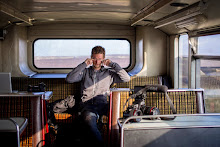
After further ‘welcoming days’ that I allowed myself in Dhaka, I took a mail train south at dawn, listening to the sound of the first prayer call of the day vibrating from the minarets. Fairly and honestly, the caller had one of the least pleasant voices I have ever heard in terms of Islamic prayer callers. Seemingly adolescent with a breaking voice, at least it covered the noise of the car horns, I was happy for that at least.
My destination was Chittagong, the favourite city of the British during colonisation, and the second city and business capital of present Bangladesh. With few places of interest to visit in town, I decided to take a tour of the city’s cha (tea) stalls. Fresh goats’ brain, copious levels of mango and cha later I moved further south to Cox’s Bazar by bus. The game of chance comes in to play here; the bus could be heading anywhere, I don’t think anybody knows. Once on the bus, the chance of being involved in some kind of road accident is around fifty-fifty.
This small town with big hotels was the playground of the middle-classes. No sooner than arriving and dumping my bag in a room equipped with no less than a cockroach and a candle, a young man called Monsur found me. Now this was a man with some serious connections. Keen to show me around his town called Ramu, a short bus ride away, and improve his beautiful subcontinental English; we did a tour and met his various relatives along the way. The bus driver was apparently his ‘brother’ (free ride), a few minutes later we bumped into his ‘uncle’ selling fruit (free bananas), and then a restaurant owner ‘cousin’ , of course (free cha). These unexpected meetings lasted the whole day and were all as comical as each other. Nobody seemed to have ever set eyes on this young man, but played his game nevertheless. For an unmarried only child with no kids of his own, and a deceased father, this was close to a miracle and I enjoyed every minute of this peculiar day.
This place, at the base of the Chittagong Hill Tracts’, and at the southern tip of the country was home to the minority people that lived secluded lives. The Buddhist and Chakma groups found themselves here after displacement from Myanmar and North Eastern India, movement of political borders and the historic, legendary paper shuffling bureaucracy of Bangladesh. Buddhist temples caught my eye, whilst the faces and tongues around me changed.
Despite being a minority in the country as a whole, within the Chittagong Hill Tracts, minorities were the majorities. Chakma, Marma, Burmese, Assamese, and groups from further afield made up the local population. The ambiance was relaxed, rickshaws were forbidden, smuggled Burmese goods went on sale at the local market, corruption was inevitably high, and security was tight.
Once there, past the security checkpoints, it is one of the most pleasant places in the country. The moon reflecting off the surface of Rangamati Lake with the night chorus croaking in the background.
Bangladesh can definitely feel like a rather overwhelming experience, the scale of genuine intrigue and friendliness can be slightly too much sometimes, but don’t let it intimidate you. Whilst I was relaxing in the beautiful plains in the north of the country, I suddenly fell ill with a rare disease called Ludwigs’ Angina. With a high fever, dehydration and feeling a little disorientated, I knew I had to return to Dhaka. Due to the hospitality and caring nature of the local people, I managed to board a postal train bound for Dhaka, where I was admitted to hospital. After an operation and a few weeks in isolation I was feeling great, but if it were not for the friendship and help of those who assisted me, my fate could have been much worse. This is the same disease said to have killed Queen Elizabeth the first long before my time.
Post recuperation, there were inevitably many more adventures to be had, and I wanted to be part of it all। I took a boat to Barisal - the gateway to the Sunderbans. Just the trip in itself was an incredible one, with horns blazing, people jumping off and on at the last minute, and being slightly overloaded left us just above the rivers’ surface. Barisal is famed for its ‘rough around the edges’ reputation, with the locals said to have been hardened by the weather, and of all things, the salt from the sea. To the visitor, the people seemed no less friendly than anywhere else in the country, maybe even more curious, and intrigued.
To be continued...